Hybrid work is efficient—but it can also amplify miscommunication and disconnection. Reflection Point brings teams into structured, story-based dialogue, allowing people to connect, speak honestly, listen deeply, and learn from one another.
We use guided discussion of a carefully chosen short story to create a place for teams that’s separate from meetings, deadlines, and performance. Because you’re talking through the story, people can lower their guard, share what they’re noticing, and understand each other without it feeling personal.
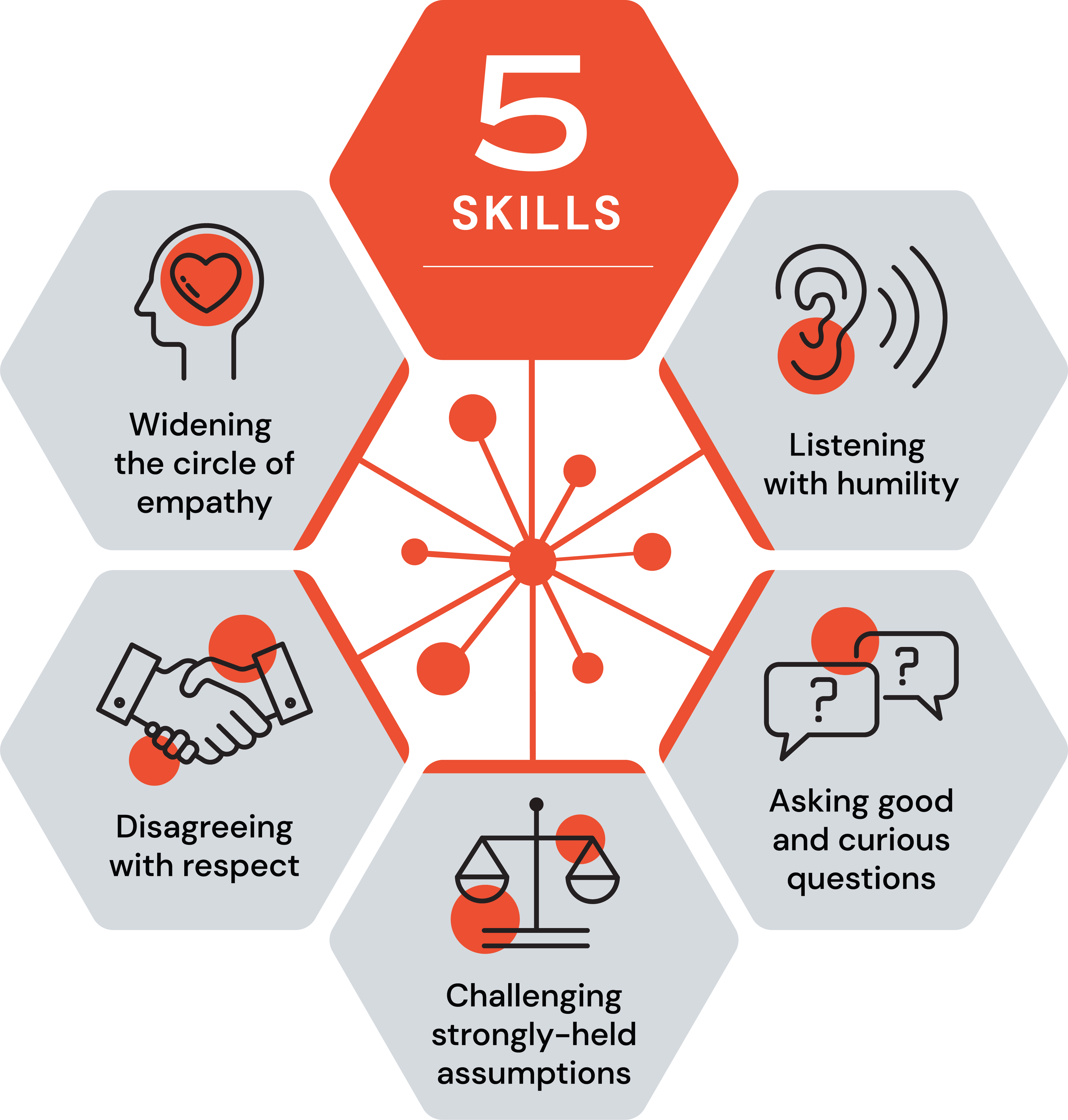
Through this process, teams practice five critical skills: listening with humility, asking better questions, challenging assumptions, disagreeing with respect, and widening empathy.
When those skills get stronger, teams move faster with more creativity, alignment, and a shared understanding.
Why Hybrid Teams Need Reflection Point
Hybrid teams don’t get the office “water cooler” moments -- the informal interactions that build trust and belonging. In hybrid, that connection has to be created intentionally.
That’s where Reflection Point comes in. We help teams rebuild connection through guided, story-based discussions that make it safer to share ideas and hear one another fully. The story is the starting point, but the conversation creates a space to explore real work challenges from a fresh angle.
What We Do
Our expert facilitators lead your team through conversations about a carefully selected short story that strengthen the five essential skills of collective intelligence. Not by teaching them, but by practicing them.
- Listening with humility
- Asking good and curious questions
- Challenging assumptions
- Disagreeing with respect but without retribution
- Widening the circle of empathy

.png)
The Impact
Teams gain more trust, curiosity, and clearer communication. With a greater sense of connectedness, they solve problems and move forward with greater alignment.
Small stories. Big shifts. Real connection in hybrid work.
“Reflection Point gave our hybrid team something we didn’t know we were missing—space to think, talk, and reconnect. We came away with new insight, stronger trust, and better collaboration.”
What Kind of Stories?
We use literature, both fiction and nonfiction, that tees up relevant and powerful topics for discussion, enabling participants to explore everyday challenges from a diferen perspective. Here are two examples, along with the discussions they inspire:
Janet Frame, "You are Now Entering the Human Heart"
In a museum in Philadelphia, the narrator watches an attendant trying to explain the harmlessness of snakes to a class by draping a live snake around the teacher’s neck. The story examines empathy, psychological safety and the relationship between shame and fear.
For caregivers in a hospital, the story created a safe venue to explore the challenges of being empathetic in a context where burnout is prevalent. A group of librarians discussed the thin line between being pushed out of your comfort zone and being pushed too far, and the duty we have to others to intervene when we witness difficult interactions.
Aimee Bender, "The Color Master"
Growing in her role, an apprentice to an ailing artisan meets increasingly difficult orders from an important customer. The story examines mentorship, succession, mastery and the struggle to achieve excellence in the face of emotions and ethical challenges.
Foundation program staff asked themselves whether they recognize ordinary as well as extraordinary efforts among their colleagues, and whether the rush of daily work preempts honoring small and large achievements. For colleagues in a large global consulting firm, the story triggered a deep discussion of the unique challenges of client work, and not getting so caught up in what a client wants that it obscures the right thing to do.
FAQs
How is Reflection Point different from traditional training or workshops?
Most training tells you what connection looks like. Reflection Point is experiential: people build connection and practice the skills together in the room, instead of hearing about them in theory.
Why do you use short stories and literature instead of business cases?
Stories offer an alternate lens on the human experience. No matter how hierarchical your organizaton might be, no one is and expert in the story. This levels the playing field and creates a low-risk space to explore challenging and relevant ideas.
How do these skills translate into everyday behaviors at work (meetings, feedback, decision-making)?
Each session is a chance to practice skills like disagreeing with respect, surfacing assumptions and truly listening. Over time, people build the confidence to carry those behaviors into meetings, feedback conversations and decision-making.
What kinds of organizations do you typically work with (size, sector, geography)?
We work with organizations of all sizes and across sectors. The common thread is a leader who believes in their people and knows that deeper human connection leads to better collaboration and performance.
Who is Reflection Point right for?
Reflection Point works at all levels of the organization and is especially successful at bridging those levels. It’s a rare intervention where senior leaders and frontline workers can participate together in a meaningful way. Reflection Point works to build bridges across the entire organization.
Is this appropriate for teams that are already high-performing, or only for teams that are struggling?
The work is especially powerful for high-performing teams that already see the value of working together and want to deepen it. Struggling teams can also benefit as they rebuild trust and reset how they relate. But they have to see the value in building the skills of collaboration.
How do you choose which stories to use for our organization or team?
We select stories after conversations with your leaders or representatives, choosing texts that surface themes relevant to your goals and context. We have worked with hundreds of stories that have raised eye-opening conversations for teams.
Will this work for fully remote teams?
Yes. We design sessions for Zoom or in-person formats, and we find both to be effective. Hybrid groups (some in person and some virtual) are not recommended.
Do people need to prep?
We keep preparation accessible. We provide a short reading and an audio version in advance, and we handle facilitation, prompts and guidance during the session.
How big are groups?
For meaningful engagement, we recommend groups of 15-18 participants per session and scale impact through multiple cohorts.
How quickly do organizations typically see impact from the sessions?
This experience is not one and done. But most teams notice shifts in their interpersonal dynamics within four to six sessions. We recommend a minimum of four sessions. These skills are like a new muscle—the more you practice, the stronger they get.